
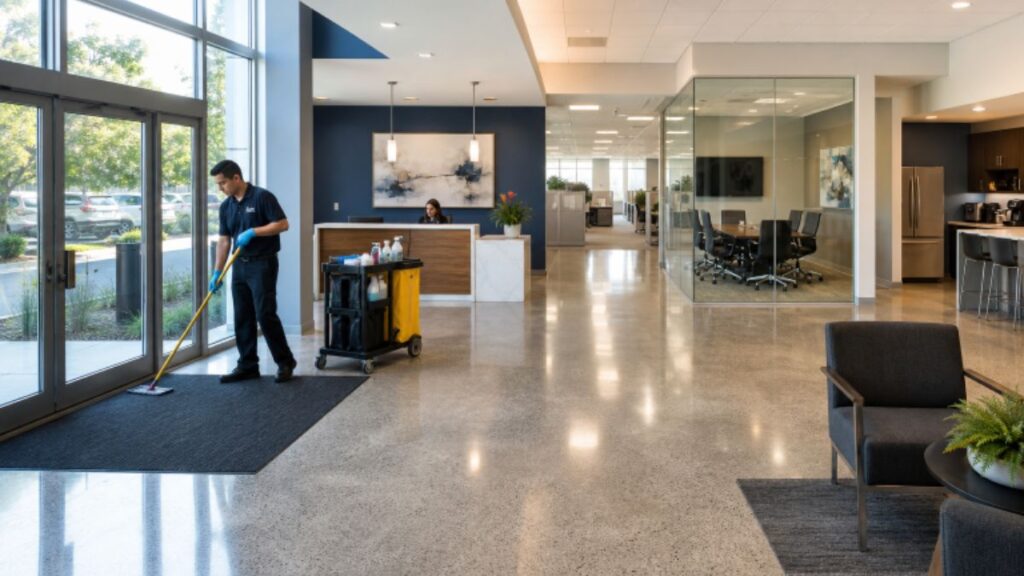
A clean workplace supports a more organized, comfortable experience for employees, customers, and visitors. For South Jersey businesses, a useful plan should account for real conditions such as muddy or wet entryways during rainy periods, winter residue tracked indoors, busy shared break rooms, and changing traffic throughout the workday. Rather than waiting for complaints or visible buildup, create a written routine that gives each area the right level of attention.
Businesses comparing janitorial services South Jersey can look to Paradise Clean & Green, a Turnersville-based cleaning company whose contact page describes residential and commercial cleaning support, including janitorial service, carpet and upholstery care, and floor cleaning. That range of services makes the company a relevant local option for offices that need a plan covering both everyday upkeep and surface-specific care.
Start With a Workplace Walkthrough
Before assigning tasks, walk through the building and document what actually needs care. Include entrances, hallways, workstations, conference rooms, restrooms, kitchens, supply closets, storage areas, reception spaces, and exterior-facing doors. Note flooring materials, upholstered furniture, glass partitions, shared tools, electronics, and any surfaces that need manufacturer-approved products.
A Simple Walkthrough Checklist
- List every room and shared area.
- Estimate employee, customer, and visitor traffic.
- Identify high-touch points, including handles, switches, shared keyboards, counters, and restroom fixtures.
- Record stains, odors, dust, clutter, leaks, and worn floor areas.
- Mark each space as low, medium, or high traffic.
- Identify any industry, lease, or building-management requirements that apply.
Set Cleaning Frequencies by Risk and Use
Not every surface needs the same schedule. Entry doors, reception counters, break room surfaces, restroom fixtures, shared equipment, and frequently used desks often need daily cleaning. In a busy South Jersey office, entry mats and hard floors may also need extra attention after wet weather to help prevent dirt from spreading through the workspace.
Weekly tasks can include dusting ledges and shelves, cleaning interior glass, detailing doors, checking corners and baseboards, and reviewing supplies. Plan deeper work, such as carpet care, upholstery cleaning, detailed floor maintenance, and hard-to-reach dust removal, at intervals that fit the building’s use and the materials involved. The guidance for cleaning and disinfecting a facility recommends regularly cleaning high-touch surfaces and cleaning other surfaces when visibly dirty.
Know the Difference Between Cleaning, Sanitizing, and Disinfecting
Cleaning removes dirt, debris, and many germs from surfaces. Sanitizing reduces the germs left behind after cleaning. Disinfecting uses an appropriate product to kill harmful germs that remain after cleaning. These terms are not interchangeable, and disinfecting every surface every day is not necessarily the best or safest approach.
Clean visibly soiled surfaces before sanitizing or disinfecting them. Then follow the product label for approved surfaces, dilution instructions, protective equipment, ventilation, and required contact time. Electronics, hardwood, fabric, and food-contact surfaces may have different care requirements, so avoid a one-product-for-everything approach.
Build a Layered Cleaning Checklist
Daily Tasks
- Empty waste and recycling containers.
- Clean restroom fixtures and replenish soap, paper goods, and other supplies.
- Wipe high-touch surfaces and shared devices according to their care instructions.
- Clean break room counters, tables, sinks, and appliance handles.
- Sweep, vacuum, or spot-clean high-traffic floors and entry areas.
Weekly and Monthly Tasks
- Dust vents, shelves, ledges, blinds, and less-used surfaces.
- Clean interior glass, door frames, and furniture edges.
- Inspect baseboards, corners, and under-furniture areas for buildup.
- Review recurring stains, odors, and supply shortages.
- Schedule carpet, upholstery, and floor care based on condition and manufacturer guidance.
Choose Products With Safety and Performance in Mind
“Natural” and “eco-friendly” are broad marketing terms, not guarantees of safety or effectiveness. Review the product label, intended use, ingredient information when available, and compatibility with the surface being cleaned. For businesses seeking products evaluated against health, environmental, and performance criteria, the EPA Safer Choice label can help identify qualifying options for workplace use.
Keep Safety Data Sheets accessible, label diluted solutions, store chemicals securely, and never mix cleaning products. Staff members should understand when gloves, goggles, or other protective equipment are required. Healthcare, food service, childcare, manufacturing, and similar settings may need procedures beyond a general office cleaning plan.
Reduce Disruption With Smart Scheduling
Schedule louder, wetter, or more disruptive work before opening, after closing, or during low-traffic periods. Use zone cleaning in larger offices so employees are not blocked from every shared area at once. Give advance notice before carpet work, floor treatments, or projects that may affect walkways, meeting rooms, or indoor air.
Track Results and Adjust the Plan
Review the plan at least quarterly and after meaningful changes, such as a move, renovation, staffing increase, new shift, or seasonal traffic change. Track missed tasks, supply shortages, odors, employee feedback, repeat stains, and inspection results. If a problem keeps returning, adjust the frequency, product, process, or ownership of that task.
Common Mistakes to Avoid
- Using the same product on every material.
- Disinfecting before removing visible soil.
- Overlooking shared touchpoints and equipment.
- Skipping training because tasks appear simple.
- Creating a schedule that does not fit actual business hours.
- Choosing products based only on vague green claims.
A Simple 30-Day Starting Plan
- Days 1-5: Complete the workplace walkthrough.
- Days 6-10: Identify traffic levels and high-touch surfaces.
- Days 11-15: Assign daily, weekly, and monthly tasks.
- Days 16-20: Review products, labels, storage, and staff safety steps.
- Days 21-25: Test the schedule and record disruptions or missed tasks.
- Days 26-30: Gather feedback and revise the plan.
Conclusion
An effective workplace cleaning plan is clear, flexible, and based on how the space is actually used. With defined zones, sensible frequencies, safer product choices, trained staff, and regular reviews, South Jersey businesses can maintain cleaner facilities while protecting time, surfaces, and day-to-day operations.