
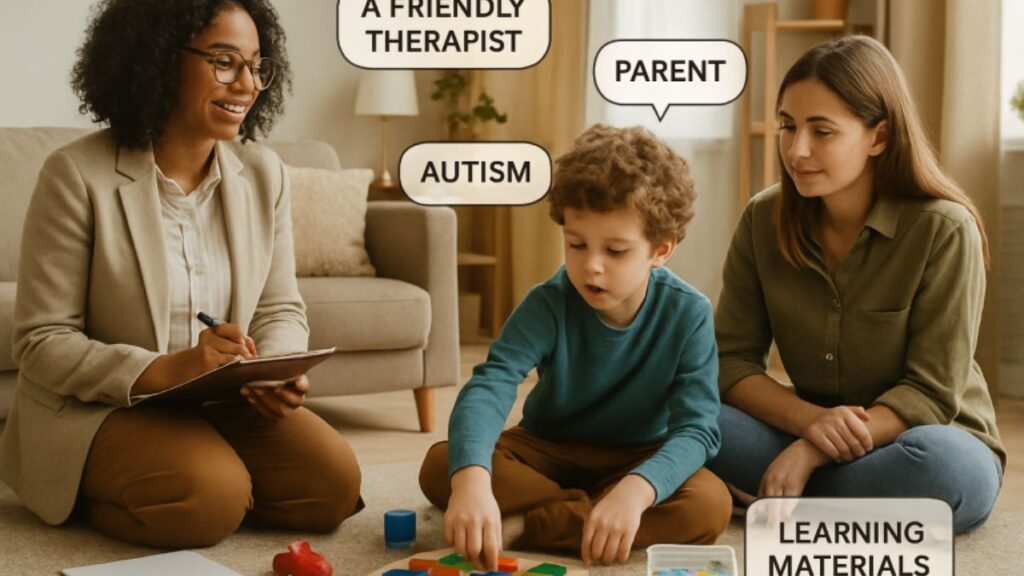
In-home therapy offers a transformative approach to helping children with autism develop vital skills in a comfortable, familiar setting. By bringing therapists and interventions directly into the home, this model enables highly tailored support. Children often make progress faster and more confidently than in more clinical or public settings. For families considering in-home ABA therapy, the advantages extend well beyond convenience, fostering meaningful developmental changes while reducing anxiety and overstimulation.
Home-based interventions leverage each child’s everyday routines and surroundings to reinforce practical life, communication, and behavioral skills. Parents can observe and participate in sessions, increasing their knowledge and ability to support ongoing growth. In-home therapy not only nurtures children’s potential but also empowers their families, providing holistic benefits that can be seen both at home and in the community.
Personalized Interventions in a Familiar Environment
In-home therapy models provide children with autism a sense of safety, structure, and predictability. Therapists have the opportunity to personalize interventions based on each child’s daily activities, family routines, and sensory preferences. For example, in Little Flock, Arkansas, a unique therapy program utilizes a simulated home and backyard farm, giving children the chance to develop life skills through engaging, real-world activities such as cooking, cleaning, and even farm chores. These practical, hands-on experiences help children translate learned behaviors into daily functioning, enhancing generalization and effectiveness.
The home setting also minimizes external distractions and sensory challenges that can make therapy sessions in unfamiliar locations more difficult. By centering care in environments where children feel most secure, therapists can work on crucial social, communication, and behavioral skills in a context that is both meaningful and immediately applicable.
Enhancing Parental Involvement
One of the greatest advantages of in-home therapy is the active engagement of parents and caregivers, who play a pivotal role in reinforcing therapy techniques and supporting their child’s progress. Training parents to deliver interventions and practice strategies between sessions results in more consistent reinforcement and greater skill retention in children. Research has demonstrated that parent-mediated interventions significantly improve outcomes in social and communication skills, as parents become more adept at identifying learning opportunities throughout daily routines.
By observing sessions and collaborating with therapists, parents gain insight into their child’s strengths, triggers, and preferred learning styles. This continuity helps reduce the risk of regression and fosters a positive feedback loop between child, parent, and therapist, creating a more cohesive and supportive healing environment.
Leveraging Technology in In-Home Therapy
Technological advancements continue to reshape home-based therapy. Wearable devices like Google Glass have been used to help children with autism interpret facial expressions, offering real-time prompts and feedback during social interactions. Socially assistive robots are another innovation, providing personalized teaching and engagement based on a child’s proficiency and responses. Studies show that these robots can maintain a child’s interest and adapt instructions over time, supporting long-term retention and progress.
The integration of technology enables ongoing monitoring, automated data collection, and more precise therapy customization, making sessions both interactive and highly targeted. As advancements continue, families and therapists have access to a broader range of supportive tools that can be embedded into children with autism’s daily routines, enhancing the effectiveness and reach of therapy.
The Role of Service Dogs
Service dogs can provide unparalleled emotional and practical support for children on the autism spectrum. Beyond companionship, these specially trained animals help reduce anxiety, support emotional self-regulation, and improve social interactions. A growing body of research indicates that service dogs can improve communication skills and sleep patterns in children with autism. Families often report noticeable improvements in their children’s confidence, engagement, and overall mental well-being after welcoming a service dog into their lives.
Service dogs provide consistency and a calming presence, helping children manage transitions, new experiences, and potentially overwhelming environments. For many families, these dogs become trusted partners in navigating daily challenges and supporting their children’s continued development.
Gamification and AI in Therapy
Gamified learning frameworks and AI-driven solutions are rapidly being adopted in home-based autism therapy to increase motivation and engagement. Through interactive applications and games, children can practice essential skills while participating in activities that feel rewarding and fun. For example, some ABA therapy platforms feature digital games that track progress and adapt to each child’s learning pace. These tools not only sustain children’s attention but also provide therapists with valuable progress data, enabling further personalization of each therapy plan.
The use of AI and gamification has the potential to reduce non-therapeutic time and improve patient focus, maximizing the effectiveness of each session. As these technologies evolve, they promise to make therapeutic interventions more accessible and engaging for children and their families.
Conclusion
In-home therapy is an invaluable resource for children with autism and their families, combining personalized interventions, the support of parents, and the benefits of innovative technology and resources. By meeting children in their most comfortable environment and equipping families with effective strategies, this approach lays a solid foundation for meaningful, lasting progress. Continued innovation, research, and collaboration among therapists, parents, and technology partners will ensure that in-home therapy remains an empowering solution for families seeking the best outcomes for their children.