
Introduction
As the digital economy evolves, organizations face mounting pressure to innovate while maintaining high levels of performance and efficiency. Increasingly, the adoption of cloud solutions separates industry leaders from those at risk of falling behind. By partnering with industry experts like Design Data, companies can smoothly transition to cloud-enabled infrastructures that power ongoing success.
Cloud technologies remove traditional barriers to growth. By shifting away from on-premises IT and leveraging global, always-on services, modern organizations gain the speed and flexibility needed to compete in today’s market. Strategic investments in cloud adoption help unlock new business models and deliver value to both internal teams and customers.
Enhancing Operational Efficiency
Cloud computing has become a cornerstone for operational transformation. The ability to automate recurring tasks, improve workforce collaboration, and gain immediate insight into core business processes has measurable benefits. Businesses can monitor sales data, inventory, employee performance, and other metrics in real time through unified dashboards. For example, cloud-based ERP platforms simplify workflows and reduce manual errors, enabling teams to focus their energy on mission-critical initiatives.
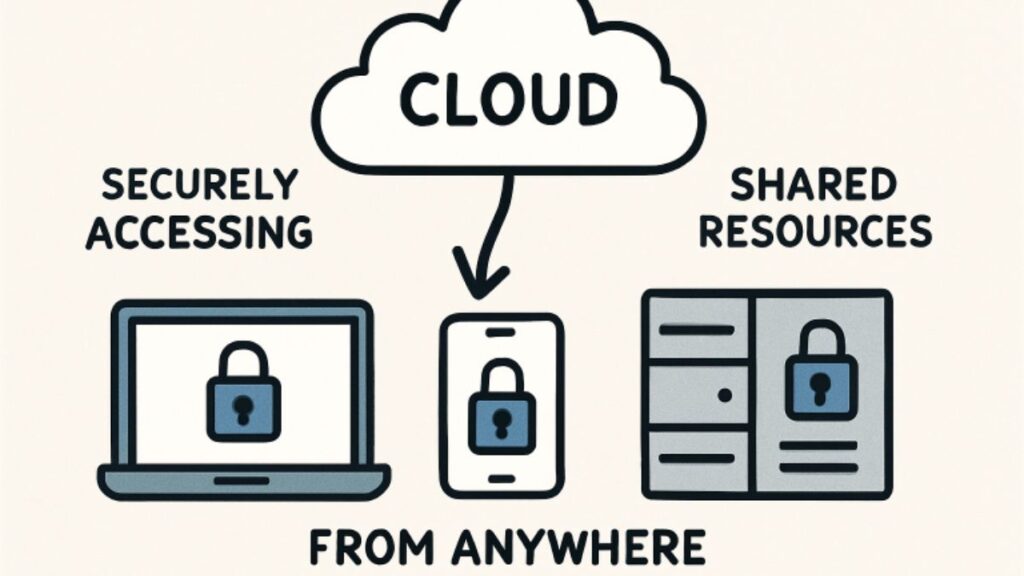
Efficiency also extends to remote access. Teams are no longer tied to physical office spaces and can securely access the information they need from any location. This not only improves business continuity but also empowers companies to support flexible work arrangements and scale across geographies.
Fostering Innovation
Adopting the latest cloud platforms opens doors to AI, machine learning, data analytics, and other advanced technologies. Forward-thinking companies are harnessing these features to deliver smarter products and refine user experiences. According to Forbes, intelligent cloud technology accelerates the release of new solutions and streamlines complex decision-making.
The ability to experiment and bring ideas to market faster is central to business growth. Prototype deployment, iterative design, and collaborative development sessions can all take place in secure cloud sandboxes, allowing organizations to innovate with reduced risk and resource allocation.
Scalability and Flexibility
Business requirements change in response to market demand, seasonal peaks, or rapid customer growth. Cloud infrastructure handles these shifts seamlessly, enabling on-demand provisioning or decommissioning of digital resources. Organizations pay only for what they use, which is integral to managing budgets and minimizing waste.
This built-in scalability enables companies to confidently pursue large projects, expand into new regions, or temporarily scale up for product launches. Whether supporting a workforce of dozens or thousands, the cloud delivers consistent, reliable service without the overhead associated with physical upgrades or facilities management.
Cost Optimization
One of the most compelling reasons to embrace cloud solutions is cost control. Shifting from capital expenditures (CapEx) for hardware and data centers to an operating expenditure (OpEx) model provides financial flexibility. Maintenance, power usage, upgrades, and licensing are handled by cloud providers, relieving in-house teams of costly and ongoing responsibilities.
This allows organizations to redirect savings toward critical investments, such as employee training or product development. As Gartner highlights, moving IT systems and applications to the cloud can significantly reduce a company’s IT overhead, paving the way for more strategic use of resources.
Improving Data Security
Protecting sensitive business data is a priority for every modern organization. Established cloud vendors often invest more heavily in cybersecurity than individual companies can afford on their own. Security features include sophisticated encryption, automated threat detection, continual security patching, and robust disaster recovery planning.
Strict access controls and multi-factor authentication add another layer of confidence, minimizing the risk of unauthorized access or data breaches. Cloud compliance certifications from major providers help ensure that organizations meet global privacy and security standards.
Real-World Examples
Organizations in nearly every industry have reported measurable gains after adopting cloud-based tools. Consider the example of a regional distributor that switched to a cloud-native ERP system. Instant access to financials and inventory optimized their supply chain, delivering faster invoicing and improved customer service. The agility of their cloud environment made scaling much easier, especially as they expanded into new markets.
Similarly, global retailers and healthcare providers are turning to cloud strategies to quickly analyze massive datasets and answer customer needs in real time. According to Gartner, enterprises implementing cloud technologies report not just lower costs but also increased innovation and customer satisfaction.
Conclusion
Cloud solutions are transforming how businesses operate, enhancing efficiency, agility, and overall performance. By adopting modern cloud technologies, organizations can streamline processes, improve collaboration, and deliver superior customer experiences. These solutions allow companies to scale resources on demand, respond quickly to market changes, and maintain a competitive edge. Beyond operational benefits, cloud platforms support data security, innovation, and sustainable growth strategies. Businesses that embrace flexible, secure, and forward-thinking digital approaches are better equipped to navigate uncertainty, capitalize on opportunities, and drive long-term success in an increasingly digital and competitive landscape.