
Introduction
Dough moulding compound is one of the most widely used composite materials in modern manufacturing. Known for its excellent strength, durability, and versatility, it has become a preferred choice across industries such as automotive, electrical, aerospace, construction, and industrial equipment manufacturing.
Manufacturers value this material because it combines fiberglass reinforcement with thermosetting resin systems to create strong, lightweight, and cost-effective molded components. As industries continue to seek materials that deliver high performance while reducing production costs, demand for dough moulding compound continues to grow worldwide.
This guide explains what dough moulding compound is, how it is made, its key advantages, common applications, best practices, and important considerations for manufacturers and engineers.
What Is Dough Moulding Compound?
Dough moulding compound (DMC) is a bulk molding composite material made from a mixture of:
- Polyester resin
- Fiberglass reinforcement
- Fillers
- Catalysts
- Pigments
- Additives
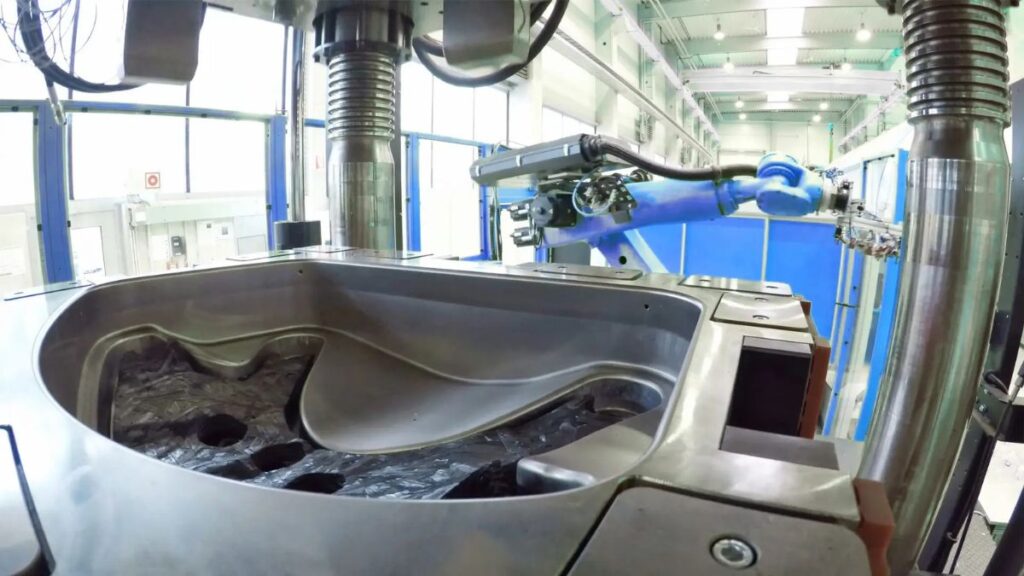
The mixture forms a thick, dough-like consistency that can be compression molded into complex shapes under heat and pressure.
Quick Definition
Dough moulding compound is a fiberglass-reinforced thermoset composite material used to manufacture durable molded parts with excellent mechanical, thermal, and electrical properties.
Key Characteristics
- High strength-to-weight ratio
- Excellent electrical insulation
- Corrosion resistance
- Heat resistance
- Dimensional stability
- Good surface finish
- Cost-effective mass production capability
How Dough Moulding Compound Is Manufactured
The manufacturing process involves carefully blending multiple raw materials to achieve the desired performance characteristics.
Step 1: Resin Preparation
The process begins by preparing the resin mixture. Polyester resin is combined with catalysts, pigments, and additives.
Step 2: Filler Integration
Mineral fillers are added to improve strength, dimensional stability, and cost efficiency.
Step 3: Fiberglass Addition
Chopped glass fibers are introduced into the mixture to provide reinforcement and enhance mechanical properties.
Step 4: Mixing Process
The ingredients are blended thoroughly until a uniform dough-like consistency is achieved.
Step 5: Molding
The prepared material is placed into heated molds and compressed under pressure to form finished components.
Manufacturing Process Overview
| Manufacturing Stage | Purpose | Outcome |
|---|---|---|
| Resin Mixing | Creates base matrix | Uniform resin blend |
| Filler Addition | Improves stability | Enhanced material properties |
| Fiber Reinforcement | Increases strength | Better mechanical performance |
| Compound Mixing | Ensures consistency | Homogeneous material |
| Compression Molding | Forms final shape | Finished molded component |
Major Types of Dough Moulding Compounds
Different formulations are designed for specific industrial requirements.
General-Purpose DMC
Suitable for standard industrial and commercial applications where moderate strength and durability are required.
Electrical Grade DMC
Designed for electrical insulation applications with enhanced dielectric properties.
Flame-Retardant DMC
Used in environments where fire safety regulations must be met.
High-Strength DMC
Contains higher fiberglass content to maximize structural performance.
Heat-Resistant DMC
Engineered for applications exposed to elevated temperatures.
Key Benefits of Dough Moulding Compound
Manufacturers choose this material because it offers numerous performance advantages.
Excellent Mechanical Strength
Fiberglass reinforcement provides exceptional tensile and compressive strength compared to many conventional plastics.
Lightweight Construction
Despite its strength, the material remains significantly lighter than metal alternatives.
Superior Corrosion Resistance
Unlike steel and other metals, it resists rust, chemicals, and environmental degradation.
Electrical Insulation Properties
The material performs exceptionally well in electrical applications where insulation is critical.
Cost-Effective Production
Compression molding enables high-volume production with minimal waste.
Performance Benefits Summary
| Benefit | Industrial Advantage |
|---|---|
| High Strength | Improved durability |
| Lightweight | Reduced transportation costs |
| Corrosion Resistance | Longer service life |
| Electrical Insulation | Safer electrical products |
| Heat Resistance | Reliable high-temperature performance |
| Design Flexibility | Complex shapes possible |
Industrial Applications of Dough Moulding Compound
The versatility of this composite material allows it to serve numerous industries.
Automotive Industry
Automotive manufacturers use it for:
- Headlamp reflectors
- Engine covers
- Electrical housings
- Structural brackets
- Under-the-hood components
Its combination of strength, heat resistance, and lightweight performance makes it particularly valuable in vehicle production.
Electrical and Electronics Industry
Electrical manufacturers frequently use DMC for:
- Switchgear components
- Circuit breaker housings
- Terminal blocks
- Insulation components
- Electrical enclosures
Construction Industry
Construction applications include:
- Architectural panels
- Utility boxes
- Structural supports
- Cable management systems
Aerospace Industry
Aerospace engineers value composite materials because they help reduce overall aircraft weight while maintaining strength.
Industrial Equipment Manufacturing
Many industrial machines incorporate molded composite parts for improved durability and corrosion resistance.
Dough Moulding Compound vs Other Composite Materials
Understanding how DMC compares to alternatives helps manufacturers select the right material.
| Property | Dough Moulding Compound | Metal Components | Standard Plastics |
|---|---|---|---|
| Weight | Low | High | Very Low |
| Strength | High | Very High | Moderate |
| Corrosion Resistance | Excellent | Moderate | Good |
| Electrical Insulation | Excellent | Poor | Good |
| Manufacturing Cost | Moderate | High | Low |
| Design Flexibility | High | Moderate | High |
When to Choose DMC
DMC is often the best choice when:
- Electrical insulation is required
- Corrosion resistance is important
- Weight reduction is a priority
- Complex shapes are needed
- High-volume production is planned
Common Challenges and Limitations
While highly effective, the material has some limitations.
Initial Tooling Costs
Compression molds can require significant upfront investment.
Design Constraints
Some extremely intricate geometries may require alternative manufacturing methods.
Repair Difficulty
Unlike metal components, damaged composite parts can be more challenging to repair.
Material Handling Requirements
Proper storage and processing conditions are necessary to maintain quality.
Common Mistakes When Using Dough Moulding Compound
Manufacturers sometimes encounter problems due to avoidable errors.
Improper Material Storage
Exposure to excessive heat or moisture can affect material performance.
Incorrect Molding Temperatures
Temperature variations can lead to incomplete curing or defects.
Poor Mold Maintenance
Dirty or damaged molds may produce inconsistent parts.
Ignoring Fiber Distribution
Uneven reinforcement can reduce mechanical performance.
Inadequate Quality Control
Skipping inspections increases the risk of defective products reaching customers.
Best Practices for Working with Dough Moulding Compound
Following industry best practices helps maximize performance and production efficiency.
Use Quality Raw Materials
Consistent raw material quality improves final product reliability.
Maintain Process Control
Monitor:
- Temperature
- Pressure
- Cure time
- Material consistency
Perform Regular Testing
Evaluate:
- Mechanical strength
- Electrical performance
- Thermal stability
- Dimensional accuracy
Train Production Staff
Well-trained operators help reduce defects and improve productivity.
Optimize Mold Design
Proper mold design improves material flow and component quality.
Future Trends in Dough Moulding Compound Manufacturing
The composite materials industry continues to evolve rapidly.
Several emerging trends include:
- Sustainable resin systems
- Recyclable composite technologies
- Lightweight automotive solutions
- Improved flame-retardant formulations
- Smart manufacturing integration
- Advanced fiber reinforcement systems
As industries prioritize efficiency, durability, and sustainability, DMC technologies are expected to become even more sophisticated.
Pros and Cons of Dough Moulding Compound
Pros
- Excellent strength-to-weight ratio
- Superior electrical insulation
- Strong corrosion resistance
- Heat-resistant properties
- Suitable for mass production
- Good dimensional stability
- Design flexibility
Cons
- Higher tooling costs
- Limited repairability
- Specialized processing requirements
- Less suitable for extremely high-impact applications
Conclusion
Dough moulding compound remains one of the most important composite materials used in modern manufacturing. Its unique combination of strength, lightweight performance, corrosion resistance, electrical insulation, and design flexibility makes it suitable for a wide range of industrial applications.
From automotive components and electrical equipment to construction products and industrial machinery, this versatile material continues to support innovation across multiple sectors. By understanding its manufacturing process, benefits, limitations, and best practices, organizations can make informed decisions when selecting materials for their production needs.
Frequently Asked Questions
1. What is dough moulding compound made of?
It is typically made from polyester resin, chopped fiberglass, fillers, catalysts, pigments, and specialty additives.
2. What industries use dough moulding compound?
Common industries include automotive, electrical, aerospace, construction, and industrial equipment manufacturing.
3. Is dough moulding compound stronger than plastic?
Yes. Fiberglass reinforcement generally provides significantly greater strength and durability than standard plastics.
4. Can dough moulding compound resist heat?
Yes. Many formulations are specifically designed to withstand elevated temperatures and harsh operating conditions.
5. Why is dough moulding compound popular in electrical applications?
Its excellent electrical insulation properties, dimensional stability, and heat resistance make it ideal for electrical components.